Managing malodour in care environments: a practical approach

.jpg)
Malodour in care environments is more than just an inconvenience. It can have a real impact on resident dignity, staff morale, and the overall perception of care quality.
In settings where comfort, cleanliness, and wellbeing are essential, maintaining a fresh and welcoming environment is a key part of delivering high standards of care.
The hidden challenge of malodour
Malodour is not always immediately obvious in care settings - and it is not always about what can be seen or easily identified.
Often, it develops in areas where odours become trapped over time, including:
- Soft furnishings such as chairs, cushions, and mattresses
- Carpets and flooring
- Areas behind and beneath beds or furniture
- Skirting boards and radiators
- Waste and drainage points
Common sources of malodour in care environments may include bodily fluids, incontinence incidents, spills, infected wounds, food and drink residue, and general stale air.
Because of this, malodour can quickly build up if not managed effectively at the source.
Why a structured approach matters
Tackling malodour effectively requires more than surface cleaning. A structured, consistent process helps ensure the source is identified and treated correctly, reducing the risk of recurring odours.
A practical approach typically includes four key stages:
1. Identify the source
Understanding where the malodour is coming from is the first step. Check soft furnishings, flooring, and hidden or high-risk areas where odours can develop.
2. Clean the area thoroughly
Use n-kind clean15 with appropriate equipment to clean the affected area and remove visible contamination.
3. Apply n-kind clean15 as a targeted cleaning solution
n-kind clean15 can then be applied to help break down and eliminate odour at its source, particularly in carpets and soft furnishings.
4. Allow sufficient contact time and repeat if necessary
Allow the product time to work effectively. In some cases, a second application may be required for persistent odours.
Supporting better outcomes in care environments
A proactive malodour management process helps care teams:
- Maintain a more pleasant and comfortable environment for residents
- Support dignity and wellbeing
- Improve the experience for visitors and families
- Maintain high housekeeping and hygiene standards
Consistency is key - especially in busy care environments where priorities can change quickly.
A practical solution: n-kind clean15
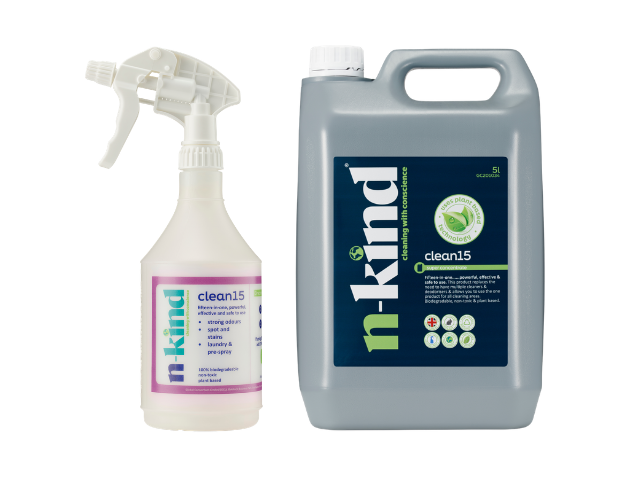
n-kind clean15 is designed to support care teams in tackling malodour at the source. It works as part of a structured cleaning approach to help break down and eliminate odours in affected areas.
It is suitable for use on carpets and upholstery when used according to guidance, and is part of the wider n-kind range focused on effective and more responsible cleaning solutions.
n-kind clean15 is also Greentag certified, supporting more sustainable product choices without compromising performance.
Conclusion
Malodour in care environments is a common but manageable challenge when the right processes and products are in place.
By taking a structured approach and focusing on the source of the issue, care teams can maintain fresher, more comfortable environments that support both residents and staff.
Discover n-kind clean15 here
You might also be interested in...
.png)

Blueleaf begins new chapter with Bunzl

Blueleaf Awarded EcoVadis Silver Medal

Blueleaf achieves Green Mark Level 2 accreditation

BOOK A MEETING
Our commitment to personal, customer-centric service starts right here. No pointless contact forms, no chat-bots.
If you're interested in learning more or have any questions, book a discovery call at a time to suit you with one of our specialist teams based in Crawley, Sussex and Castleford, West Yorkshire.
We can't wait to meet you.
Just select a date and time from this calendar that's convenient for you, and we'll do the rest.

